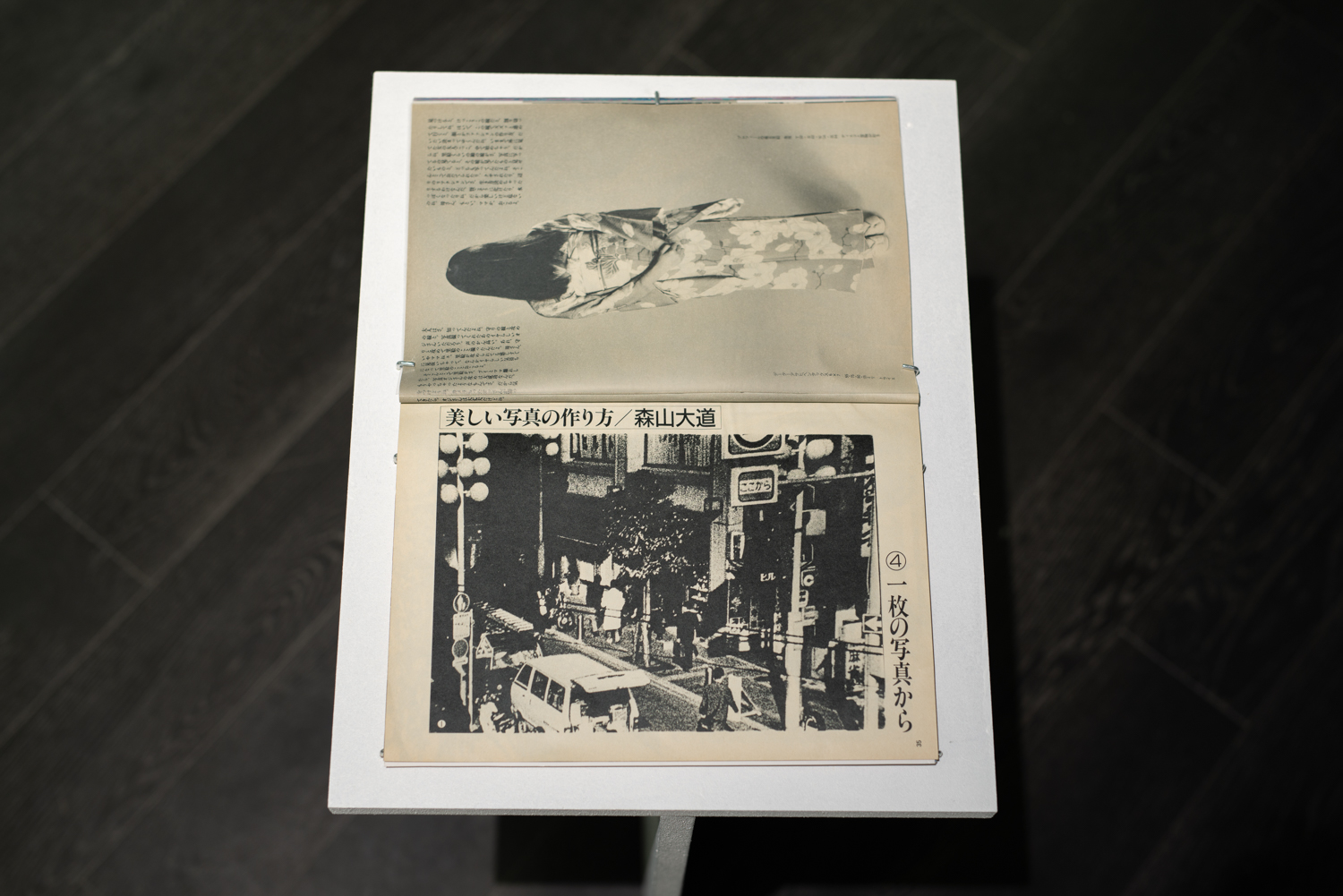
How to Create Beautiful Pictures From One Photograph
Jean-Kenta Gauthier Odéon
5 rue de l'Ancienne-Comédie 75006 Paris
Opening reception: Wednesday 14 October, 6-8pm
Save the date: Thursday 10 December, public conversation with Clément Cheroux and Jean-Kenta Gauthier
“But all swells as the curious eye draws near,
Close enough for an eyelash to snag here and there.”
(Raymond Roussel, La Vue [Sight], lines 13-14, 1904)
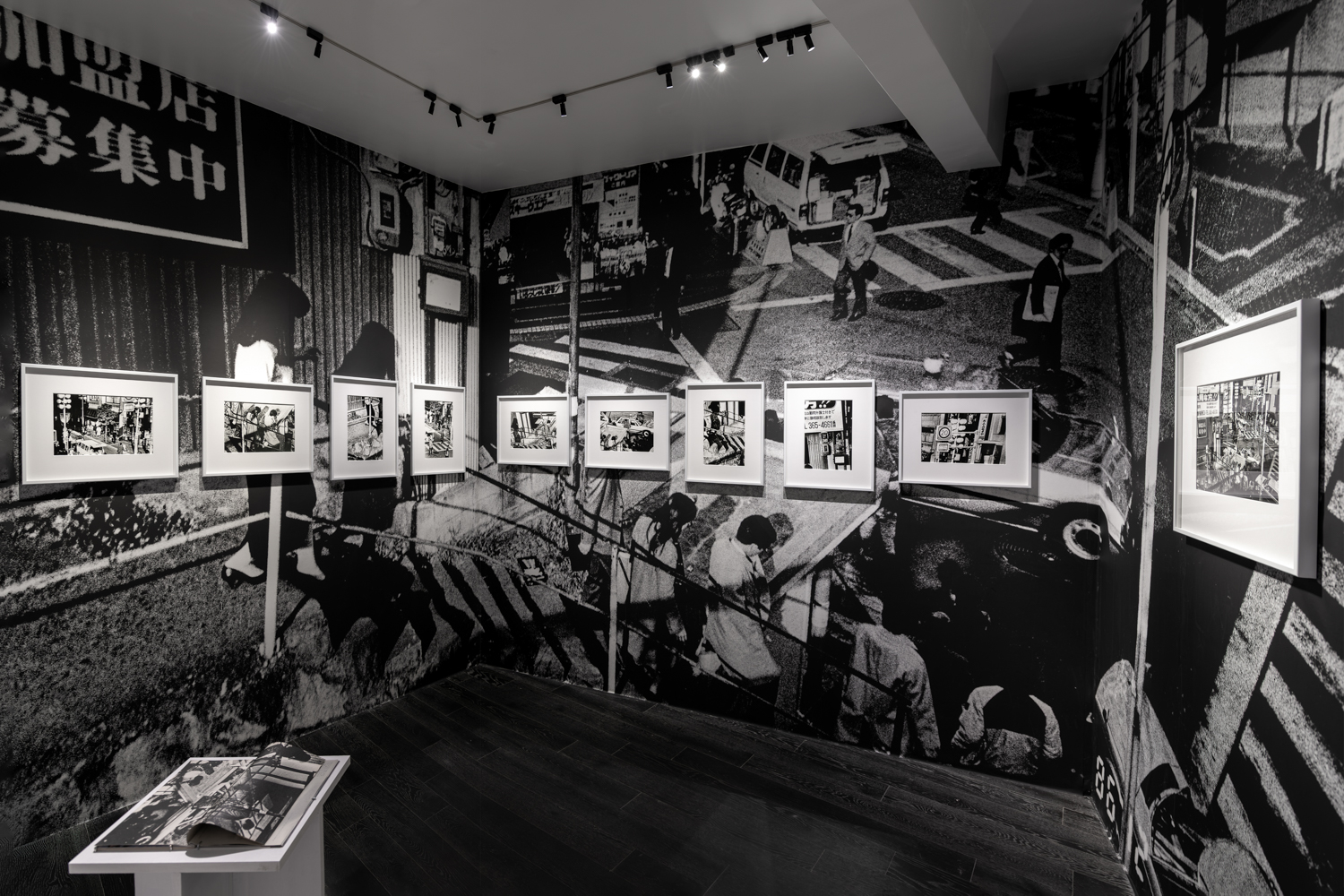
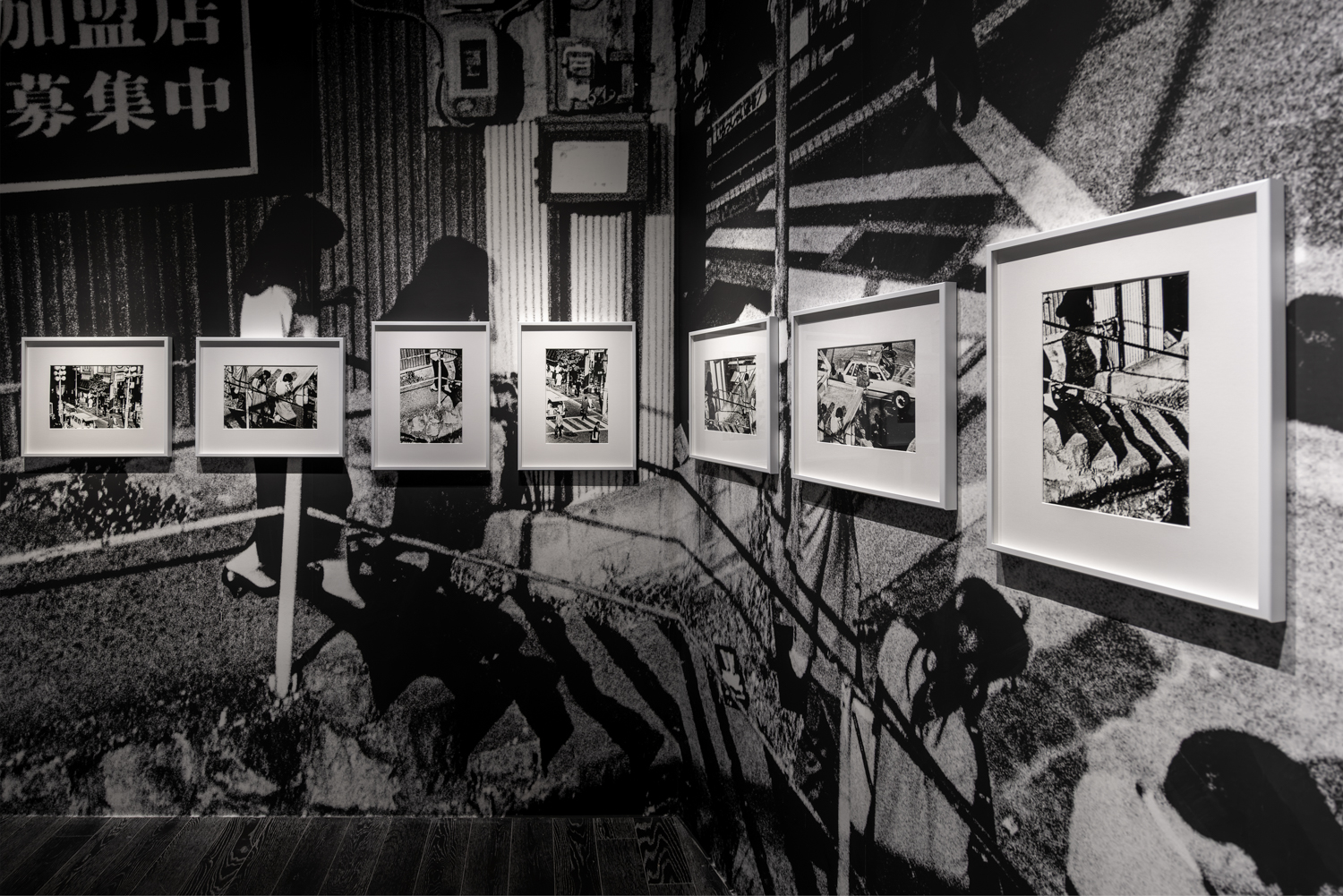
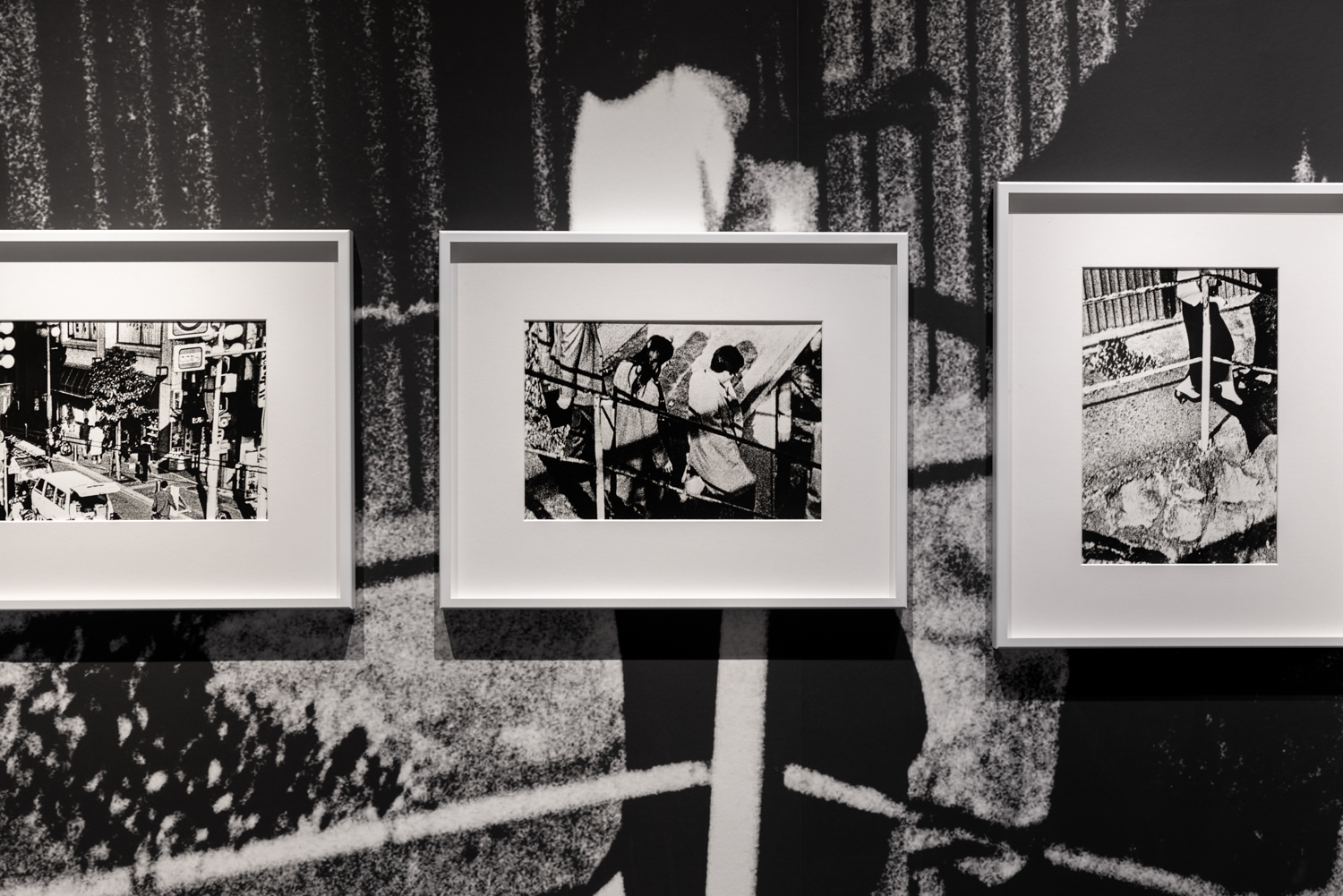
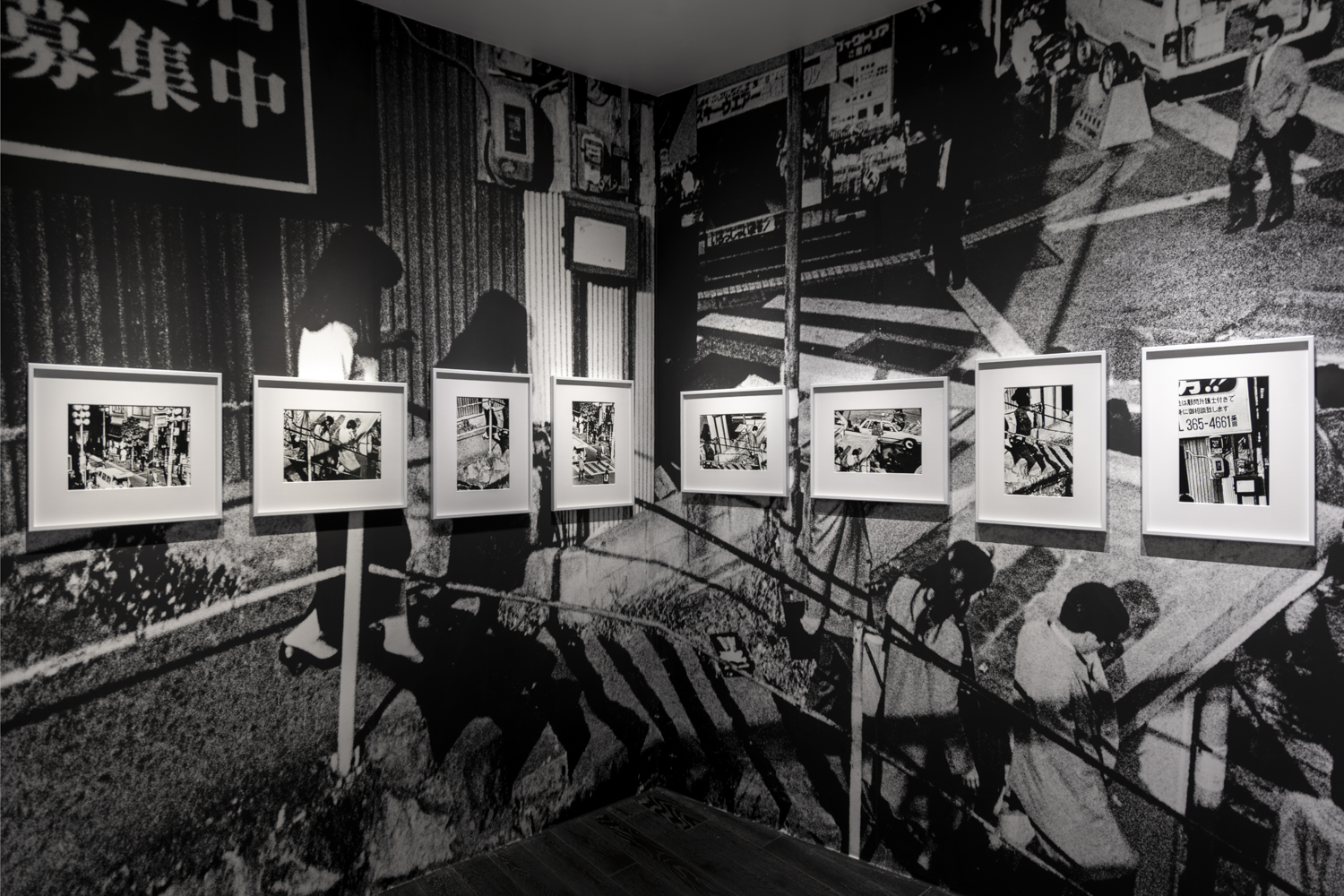
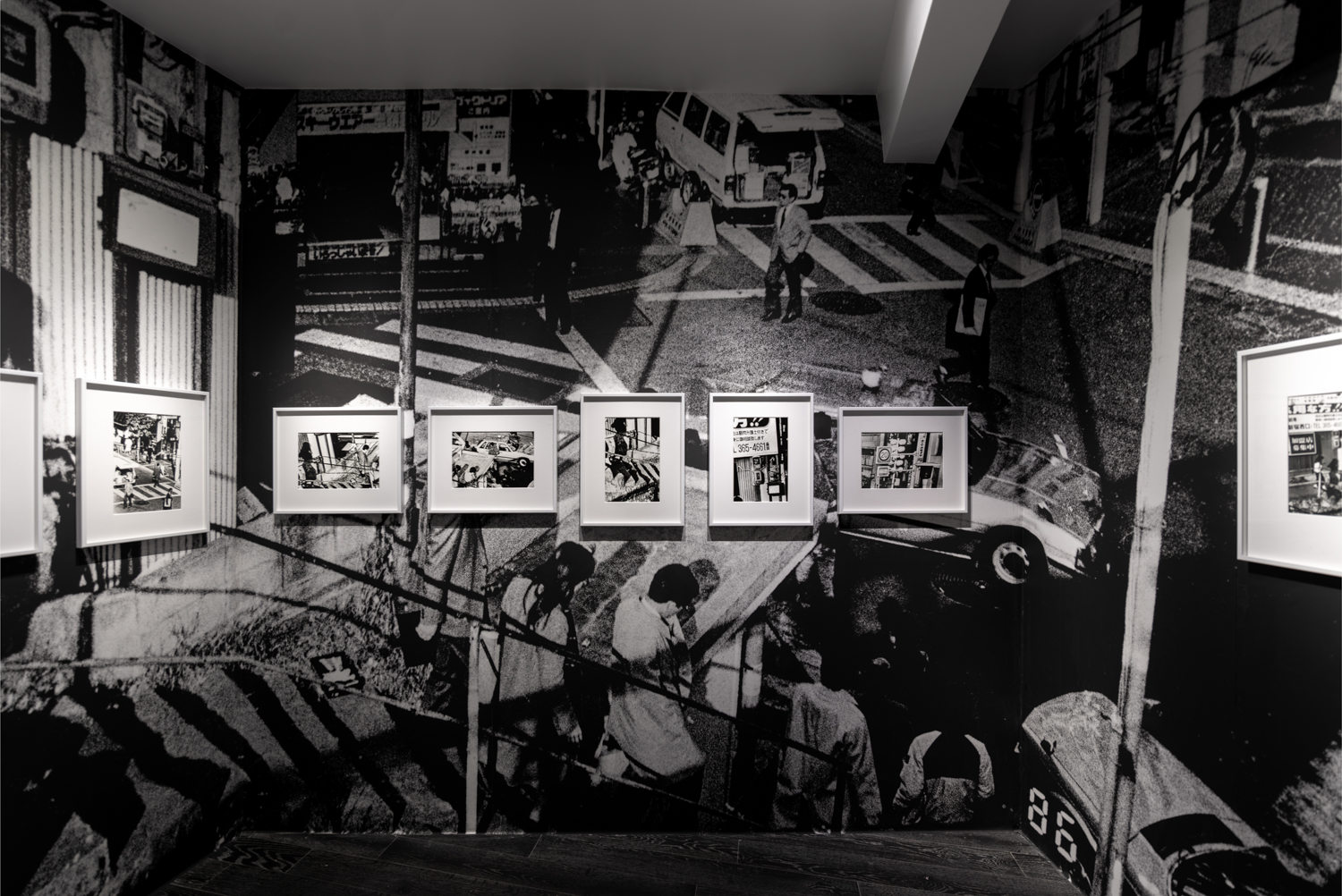
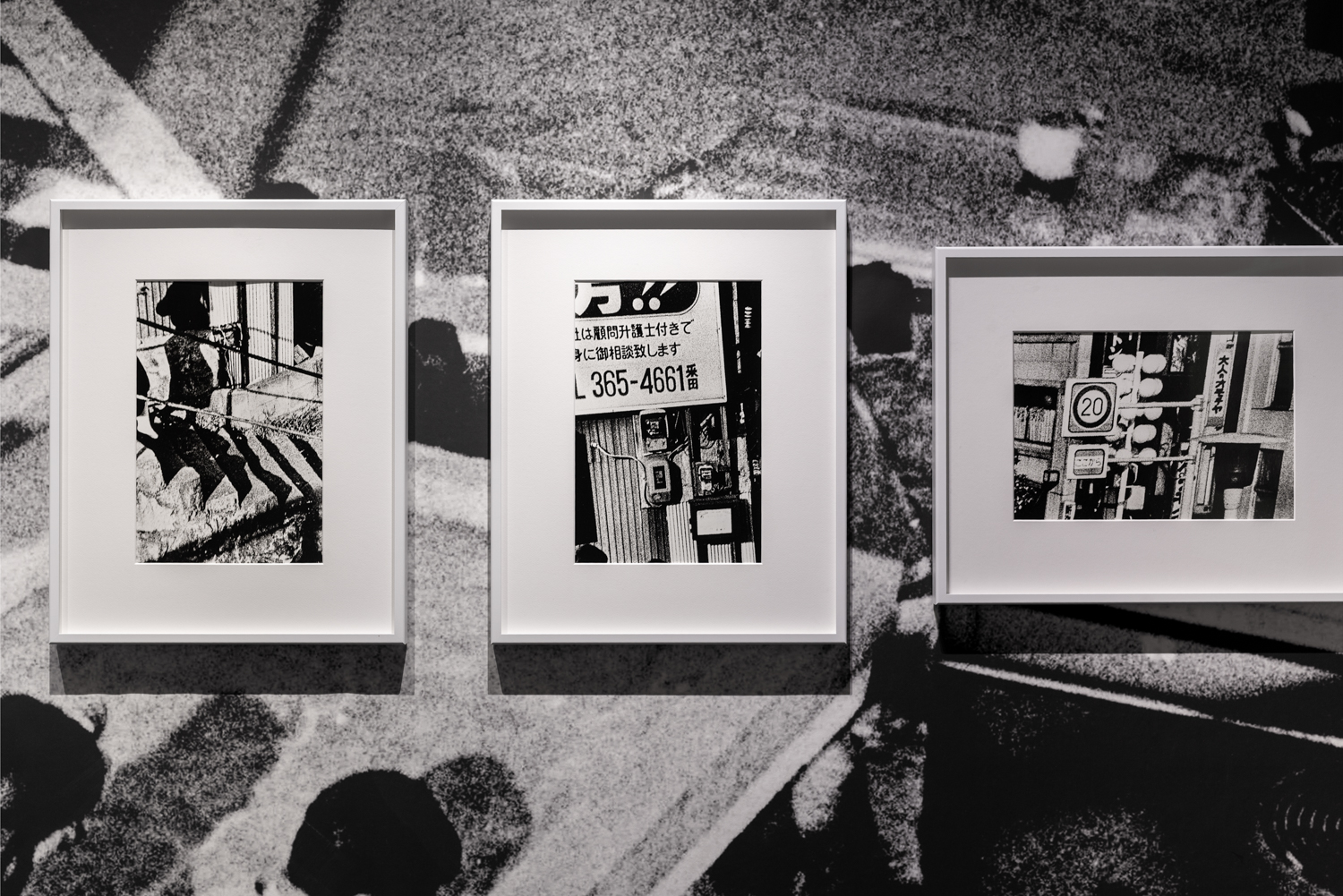
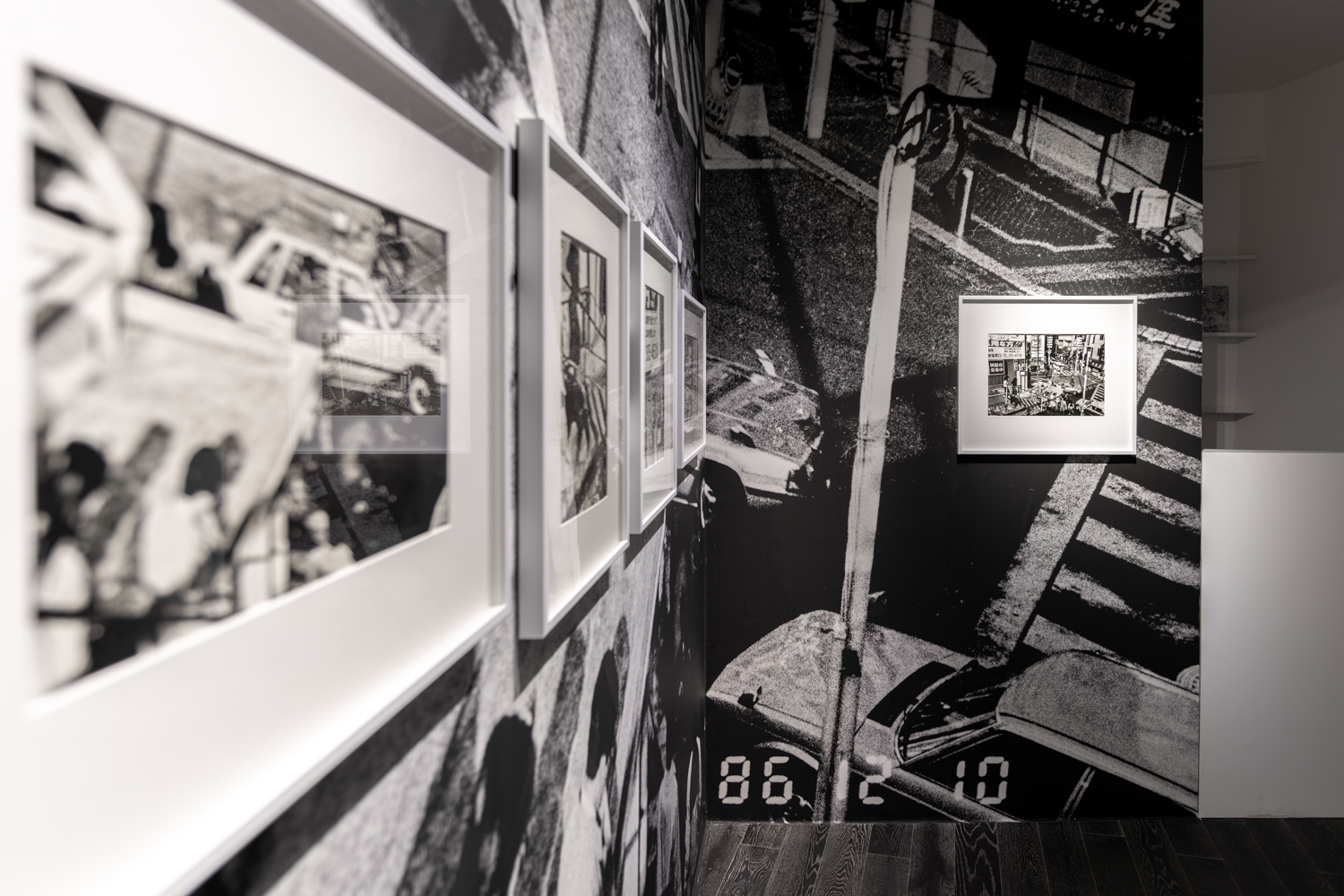
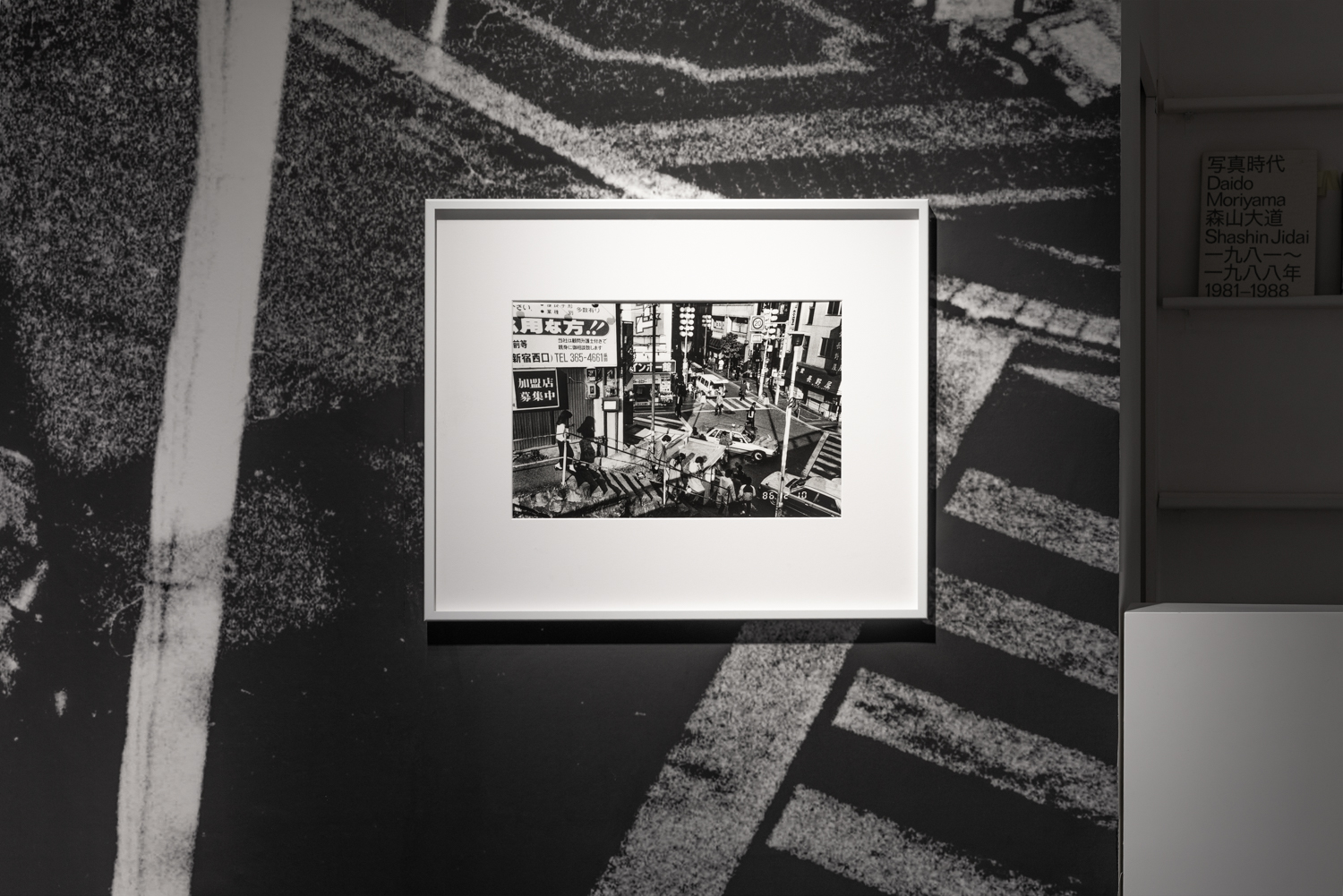
“When you are out in the street taking snapshots, checking every corner of the image through the viewfinder is unthinkable […], and that is precisely what makes spontaneous photographs so fascinating,” writes Daido Moriyama (born in Ikeda, Osaka Prefecture, in 1938) in the text accompanying the photographs of How to Create Beautiful Pictures – 4: From One Photograph. On a sunny day, December 10, 1986, he photographs passersby on a staircase near Shinjuku Station in Tokyo, from an elevated vantage point. That same evening, he makes a 14 × 17-inch print of the image, then picks up his camera to photograph nine details of it, creating a distinctly conceptual sequence of ten photographs, published together with the text quoted above in the March 1987 issue of the Japanese photography magazine Shashin Jidai. How to Create Beautiful Pictures – 4: From One Photograph (1986) is exhibited here for the first time. The set of ten prints—the matrix image and its nine details—is presented against a wallpaper featuring an enlargement of the matrix photograph, inviting viewers to scrutinize it even more closely.
The collaboration between Daido Moriyama and Shashin Jidai ran from 1981 to 1988. He published six major projects in the magazine, including How to Create Beautiful Pictures, which appeared in fifteen installments between December 1986 and February 1988. With its deliberately ironic title, How to Create Beautiful Pictures functions as a kind of tutorial on how to make a “beautiful photograph.” Some installments have become iconic, such as lesson No. 6, Tights in Shimotakaido, published in May 1987, featuring close-ups of legs clad in fishnet stockings, also accompanied by a text. Having radically challenged the conventions of “good” photography in the early 1970s, Daido Moriyama set out, through his magazine publications, to redefine the fundamental principles of photography, step by step. “Moriyama’s ontological reflections have often taken the form of wanderings through the streets of the cities where he lived. In the 1980s, he embarked on a series of peregrinations for the magazine Shashin Jidai that amounted to questions addressed to photography itself. […] They continue to probe the nondiscriminatory nature of photographic recording, whereby a single frame can contain multiple, different scenes,” writes Clément Chéroux in his foreword to Daido Moriyama: Love Letters to Photography (Paris, Éditions Delpire and Fondation Henri Cartier-Bresson, 2026).
What do the nine detail images tell us? By focusing on a small group of individuals, we find ourselves wondering whether these passersby are really so unrelated to one another, or whether the posture of a man and a woman isolated within the frame makes them a couple. We wonder why the two men wearing dark glasses are crossing outside the crosswalk, and find ourselves imagining their characters, as Raymond Roussel does with the people populating a photograph of a crowd on a beach, which he heroically endeavors to describe in 2,056 lines in his poem La Vue [Sight] (1904). We wonder whether the artist is addressing us by showing us a first sign indicating a speed limit of 20 km/h, followed by a second reading “from here on”, as though inviting us to slow down. Images of images are a constant in Daido Moriyama’s work. Since he began photographing in the mid-1960s, he has repeatedly reproduced posters in the street and in shop windows, as well as reflections in storefront glass. Photography is an art of attention, and here Daido Moriyama searches within his photographed street as he would search in the street itself. It is therefore hardly surprising that some of the details are almost indistinguishable from images he has made repeatedly out on the street. A tilted view of a poster and an electricity meter, the shadow of a woman cast on a wall, or a close-up of her legs: these images could have been made directly in the street, and the pronounced grain is no reliable clue, since Daido Moriyama’s photographs are often grainy.
In the text accompanying How to Create Beautiful Pictures – 4: From One Photograph, Daido Moriyama puts forward a hypothesis: “If, for example, one were to continue duplicating the detail of the photograph used here, and to reproduce this fragment of an image over and over again, ad infinitum, one would probably end up with something like a photographic particle.” In the movie Blow-Up (1966), adapted from a short story by Julio Cortázar, Michelangelo Antonioni portrays a photographer who discovers, in his spontaneous images, a detail that sets him on the trail of a crime. During the night, his studio is burgled, and the thieves take all the evidence except for a single print: an enlargement of a detail that, to the inattentive eye, looks like nothing more than an abstract, grain-filled photograph. In his text, Daido Moriyama stops where the plot of Blow-Up begins: at the interpretation of these photographic particles. He continues: “And if one were to take this line of reasoning to its extreme, perhaps one might go beyond this photographic corpuscle, and photography would eventually pass ‘through to the other side’ of the image.” In Through the Looking-Glass (1871), the sequel to Alice’s Adventures in Wonderland (1865), Alice falls asleep in an armchair and dreams of passing through the looking glass in the drawing room, discovering a marvelous world where one must run very fast just to stay in the same place. How to Create Beautiful Pictures – 4: From One Photograph reminds us that to photograph is to look, and that a still image can offer a marvelous journey, perhaps one without end.
(Jean-Kenta Gauthier, octobre 2026)
___
Daido Moriyama was born in 1938 in Ikeda, Osaka Prefecture, and lives in Tokyo. His photographs, writings, and publications are acclaimed worldwide. This exhibition is organized in collaboration with the Daido Moriyama Photo Foundation and is part of the Bicentenary of Photography.
A photography historian and curator, Clément Chéroux is director of the Fondation Henri Cartier-Bresson in Paris, where he recently curated the exhibition Daido Moriyama: Love Letters to Photography.
The images and text from How to Create Beautiful Pictures – 4: From One Photograph, first published in March 1987 in the Japanese magazine Shashin Jidai, are reproduced in Daido Moriyama: Love Letters to Photography, co-published by Éditions Delpire and the Fondation Henri Cartier-Bresson on the occasion of the exhibition of the same name, with introductory texts by Clément Chéroux and Jean-Kenta Gauthier.